AI in Academic Libraries
Is Prompting
the new Query?
Technology & Trends
Artificial Intelligence (AI)
AI is defined as when machines can simulate human intelligence (UNESCO, 2025) and complete tasks that would otherwise require human perception and problem solving. There are multiple approaches to AI, but a common technique today is machine learning or deep learning.
Machine learning finds complex patterns in data and can predict future values, but it does this whether the patterns are real or not. The patterns learned by AI are often not the same as those a human might identify, such as associating success with the same watermark instead of correctly identifying an object in a photo.
Generative AI synthesizes text, images, video, speech, or code with similar disregard for ground truth. The correspondence between the output and the real world is statistical and depends upon the training data. Models can only approximate what they have not yet seen. Current systems lack the ability to understand the meaning of the output even if they mimic the syntax. In this way, AI is simulated intelligence.
The central dilemma with AI is that machine learning can be orders of magnitude more effective given the right conditions, but it comes with profound downsides. The failure modes are still largely unknown. The internal workings of large models are opaque and training data sets are not shared in the open. The affordances provided by natural language processing create a set of use cases as broad as human language itself. This makes it all the more difficult to study models as information tools and requires the development of evaluative frameworks (Ghosh, 2024).
Summary
Academic libraries have important and continuing roles to play in an era of AI by identifying individual and community information needs, helping to find data and models, evaluating quality, supporting data management, drafting policy, documenting context and provenance, advising on copyright, and teaching digital literacy skills (Cox et al., 2024; Cox, 2024). These skills should include navigating technology hype cycles and thinking critically about the use of AI in their lives.
Libraries can help mitigate the risks of AI and best respond to changing social relationships to technology by keeping users in the loop. In this way, we must be both pragmatic and willing to defend our patrons, listening to the lived experience of students, faculty, and staff along the way.
Introduction
An important discussion is currently underway in scholarly literature and the broader public about the metaphysical status, ethics, and utility of AI. Whatever the outcome of these conversations, libraries will need to grapple with the advent of AI in the information landscape.
As to whether prompting is the new query, there remains a dearth of evidence, but information scientists have raised critical questions about the suitability of generative AI for information retrieval (Shah & Bender, 2022; 2024). What use cases it is suited for is a moving target, one which libraries must track in order to best advise patrons on the use of AI.
New Terms
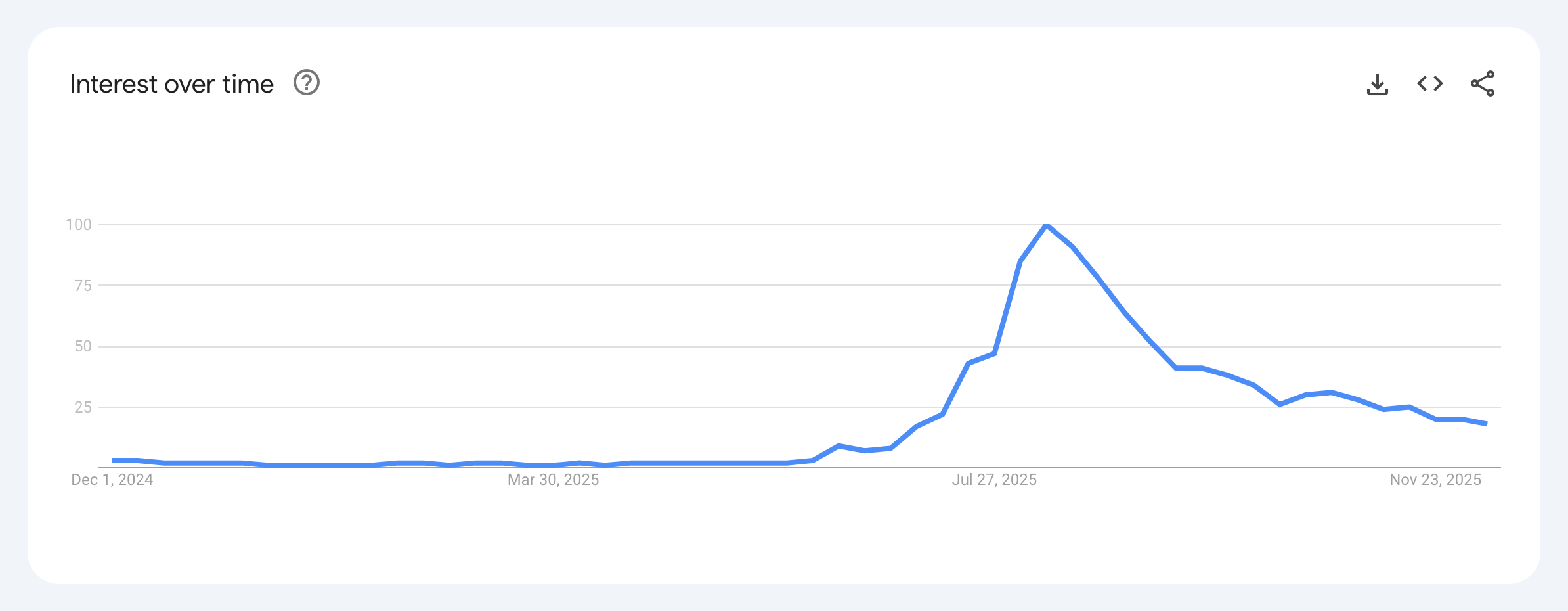
An indicator that public backlash against AI is underway, 2025 saw the rise of a new slang term, clanker, a derisive term for robots and intelligent machines. This suggests the hype is fading and may indicate changing patron orientations to AI.
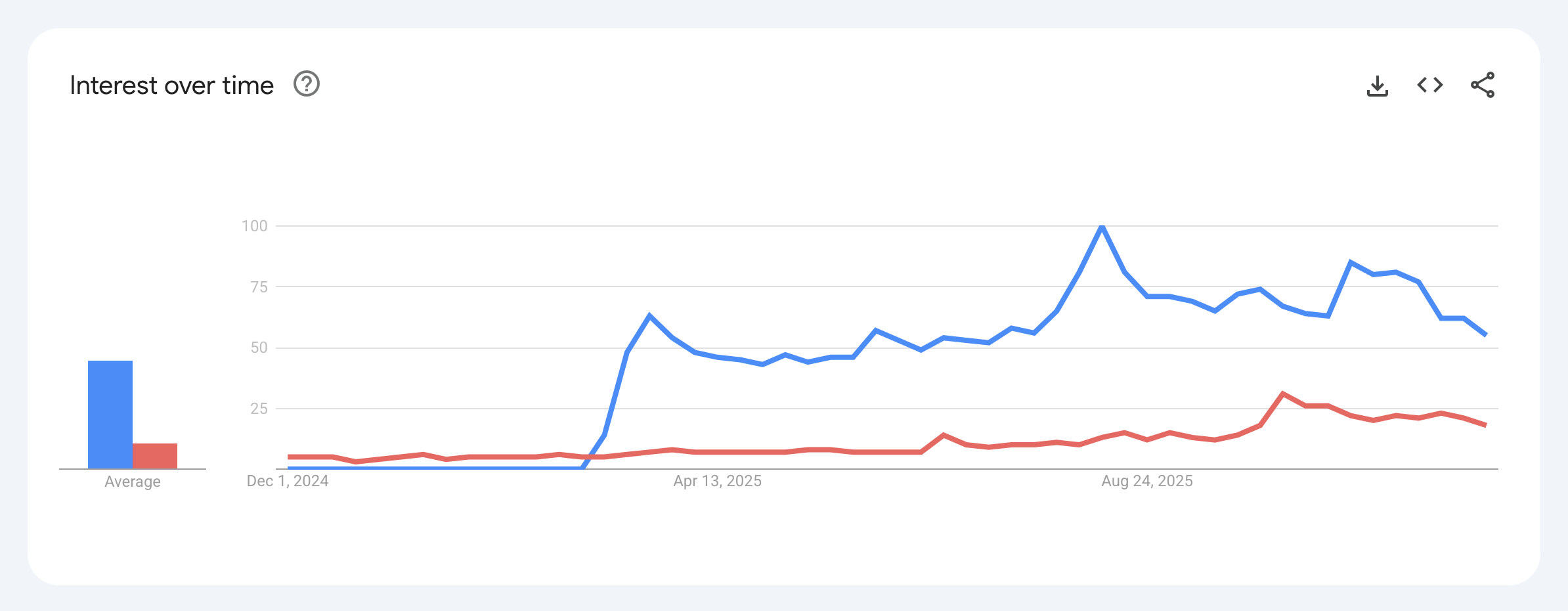
The same can be said for vibe coding. The term is used pejoratively by software developers to refer to code generated by AI but which is not well understood by the prompter. A similar term is AI slop, again referring to the poor quality of machine learning output.
Context
The current context for AI is changing rapidly. The state-of-the-art and public reaction to changes in their information ecosystem are both moving at breakneck pace. Capabilities are increasing and they outpace both policy and scholarly discourse around AI.
Nobody wants to be automated out of a livelihood. Staff may resist exploration of AI when they (rightfully) perceive it as a threat. The safest environment in which to experiment with a new technology is one where those testing it know ahead of time it is not going to come for them. The nature of non-linear effects all but guarantees this as a possibility. Nonetheless, organizations should try to reassure staff that failed experiments are welcome outcomes and successful ones will not imperil their jobs. This works all the better when library staff can share this exploration with their users. “Great libraries are libraries that dare to experiment together with [their] users” (Marie Østergård, qtd. in Stephens, 2019).
Users & Stakeholders
Students are already copying LLM output into assignments without sufficient critical evaluation. AI literacy is low among students and the general public (Lund & Franks, 2024).
Norms for AI use are likely to be different across disciplines depending on their beliefs and norms around AI technology, e.g., data science versus library and information science (Lund & Franks, 2024). Broadly speaking, students in the arts are more trusting of AI output than students in the sciences (Novin, 2024). This suggests services and instruction will need to be tailored to different communities and their relationship to AI and new technology more generally.
Relevant Capabilities
There are a number of current and prospective capabilities of AI which libraries could leverage:
Data Analysis
Assessment, data visualization, sentiment analysis of patron feedback (Lund & Frank, 2024)
Named entity recognition, categorization, text mining (Hong, 2024)
Learning & Instruction
Qualitative research, self-directed learning (Cox et al., 2024)
Instruction, personalized tutors, teaching assistants using the Socratic method, adaptive teaching methods
Student assessment, detecting plagiarism
Medical and clinical simulations, low stakes speaking practice (EDUCAUSE, 2025)
Library Operations & Access
Operational efficiency, collection management (Gupta, 2024), interlibrary loan requests
Personalized recommendations, readers advisory, digitization, deduplication, generating metadata, predicting patron and user behavior (Cox, 2024)
Media Transformation
Translation, transcription, automatic captioning, narration, image descriptions
Generative text, images, speech, music, video
Risks
The risks of AI are many and those are just the ones we know. Lack of transparency and model bias (Lund & Franks, 2024) mean models will produce output which includes and excludes people and communities based on the quality of training data. For instance, when the AP cropped Ugandan climate activist Vanessa Nakate out of a photo in 2020, she is excluded from downstream metadata, indexes, even history (Novin, 2024).
Lack of training data which includes BIPOC has also lead to false arrests (Novin, 2024) such as the case of Robert Williams misidentified by a facial recognition algorithm. Medical devices which rely on machine learning can be less accurate for people with darker skin. It is similarly true for chest x-ray models which overrepresent white male patients in their training data (Pendyala, 2024)
Increasing model size creates an incentive to gather more and more data to train upon. If the available training data is not inclusive, this further widens the gap, called documentation debt (Bender et al., 2021, qtd. In Hoffman, 2024).
AI can also represent a threat to privacy (Hoffman, 2024) both from sharing personal user data with commercial enterprise and from possible security breaches. The simple truth is we still do not know many of limitations and failure cases of AI. It took humanity some 70 years to put three-point harness seat belts in automobiles. We may be similarly lacking what in retrospect will be obvious safety features.
At least in the US, regulations of AI are “lacking or ineffective” (EDUCAUSE, 2025) despite ethical questions about its effects on human agency and creative economy. Frequent use of technology, including AI, may have negative effects on human cognition, attention span, memory, and increase cognitive overhead (ibid).
Finally, there is the specter of epistemic collapse amid lack of trust:
The ubiquitous use of AI—marked by access to free tools, the lack of critical data literacy, and the proliferation of user-generated content being believed as ‘fact’—makes checking the accuracy of generative AI outputs in unmoderated contexts nearly impossible. (EDUCAUSE, 2025, p. 6)
Examples of AI in Libraries
Digital Literacy Pop-Up Teaching
Librarians at Virginia Tech are taking their digital literacy instruction outside the classroom to students in their daily lives. The idea is to try smaller, innovative learning activities and present them beyond the library, on the street, and at campus events. They observe pop-up teaching has “increased instructor satisfaction, interaction numbers, and learning diversity” (Feerrar & Hammer, 2025).
Topics include the impact of generative AI and a test for students to assess their confidence in identifying generated images. Librarians have also produced digital literacy merit badges for students to share their accomplishments.
Processing Bibliographic Metadata
Huskey (2025) details the process of fine-tuning an existing generative AI model to process inconsistent bibliographic metadata, a common task. Their results point to real efficiencies to be realized from machine learning and genuine insights into collection coverage. In other words, AI is not all hype; It can free up humans from drudgery in favor of work which is both more valuable and more fulfilling. “Creative work is what remains after outsourcing and turning repetitive work over to computers” (Stephens, 2016).
Strategies for Implementation
Participatory Service
AI would seem to be at cross purposes with participatory service, community building, and empathy for the user. On the one hand, the efficiencies it creates can free up people to focus on creative work, but it may also redirect the human interaction that otherwise would have occurred in a community with real people. Chatbots may never get tired, but they cannot actively listen. How can the library be more human as technology crosses the uncanny valley and successfully simulates human interaction? If this effectively removes humans from the process, what is left?
Part of the answer is in welcoming the input of With a set of use cases so vast, users are going to help us discover constructive uses and failure cases for AI. We need only “[o]pen the doors to local experts and creators to teach and share” (Stephens, 2016).
Sharing Stories
Does AI allow users to tell their story better, more thoroughly, more accurately? Generative AI provides new affordances which allow the user to generate the words, illustrations, even video which tells that story. But it comes at the cost of algorithms which push artistic output toward a regression to the mean. The smooth-ing out of details or the addition of small but significant details like an extra finger changes the story that the patron is able to tell. The details matter.
What StoryCorps does so well is capture the stories of people of color, LGBTQ folks, and the disabled that often don’t make it into mainstream media. That’s a role for libraries. (Stephens, 2019)
Libraries should investigate where they and their users can benefit from machine learning, but they should also apply critical thinking and help fill in gaps left by the university-wide adoption of AI technologies.
The Strategy
Given this, a basic strategy might look like:
- Automate what can be reliably automated using machine learning.
- Invite students and faculty to participate in discussions (ones which university administration are reluctant to have) about the social effects of AI and what services the library should offer in this context.
- Teach digital literacy though active learning, including how to be safe using AI.
Conclusion
The hope of librarianship is not to know everything but to know enough to converse meaningfully with people in the vocabulary of their experience and expertise.
AI holds the prospect of widening this discursive community to those with whom we could not otherwise communicate. The relationships built by these new conversations create a possibility for systems which are more human, à la Peter Block. This in turn increases network value, which rises with the square of the population, according to Metcalfe's law. Libraries have an important role in democratizing the distribution of the information within that network and facilitating these new relationships.
At the same time, AI follows a similar pattern to the deployment of new technologies within the market economy. Tressie McMillan Cottom (@tressiemcphd) in a mini-lecture on AI and The Promise of Access by Daniel Greene astutely noted that universities pivoted from concerns over pedagogy and cheating to fully embrace the AI future. They did this because they need the funding and it deflects from political red-baiting. The danger is AI falls into the familiar trap of trying to solve a social problem with a technological solution. Greater access to AI may well be valuable to people but it is no substitute for addressing poverty and social inequality (2024).
References
Cottom, T. M. (2024, October 15). Mini-lecture on AI, politics, and inequality. Instagram. https://www.instagram.com/reel/DBKllBxIAJh/
Cox, A. (2024, May 28). Identifying opportunities and challenges of AI in library and information environments. IDEA Institute on AI. ASIS&T.
Cox, A. (2024, May 29). AI and library strategy. IDEA Institute on AI. ASIS&T.
Cox, A., Ghosh, S., Hoffman, D., & Hong, L. (2024, May 28). Defining AI. IDEA Institute on AI. ASIS&T.
Feerrar, J., & Hammer, K. (2025). Digital literacy pop-up teaching. Virginia Tech University Libraries. https://guides.lib.vt.edu/c.php?g=1454015&p=10808712
Ghosh, S. (2024, May 30). Mastering model evaluation. IDEA Institute on AI. ASIS&T.
Hoffman, D. (2024, May 30). AI and blockchain for libraries. IDEA Institute on AI. ASIS&T.
Hong, L. (2024, May 30). Comprehending the semantic essence of text: Leveraging SÉANCE for textual analysis. IDEA Institute on AI. ASIS&T.
Hong, L., & Song, X. (2024, May 29). Data collection, classification, and transformation. IDEA Institute on AI. ASIS&T.
Huskey, S. J. (2025). Cost-effective machine learning for automatically processing bibliographic metadata. International Journal of Humanities and Arts Computing, 19(2), 112–126.
Liu, N. F., Lin, K., Hewitt, J., Paranjape, A., Bevilacqua, M., Petroni, F., & Liang, P. (2024). Lost in the middle: How language models use long contexts. Transactions of the Association for Computational Linguistics, 12, 157–173.
Lund, B., & Franks, P. (2024, May 29). AI trends in library and archives. IDEA Institute on AI. ASIS&T.
Novin, A. (2024, May 30). AI in information search and discovery. IDEA Institute on AI. ASIS&T.
Pendyala, V. (2024, May 31). Equity, diversity, inclusion, and social justice in AI projects. IDEA Institute on AI. ASIS&T.
Robert, J., Muscanell, N., McCormack, M., Pelletier, K., Arnold, K., Arbino, N., Young, K., & Reeves, J. (2025). EDUCAUSE Horizon Report: Teaching and learning edition. EDUCAUSE.
Shah, C., & Bender, E. M. (2022). Situating search. Proceedings of the 2022 Conference on Human Information Interaction and Retrieval, 221–232. https://doi.org/10.1145/3498366.3505816
Shah, C., & Bender, E. M. (2024). Envisioning information access systems: What makes for good tools and a healthy web? ACM Trans. Web, 18(3), 33:1-33:24. https://doi.org/10.1145/3649468
Stephens, M. T. (2016). The heart of librarianship: Attentive, positive, and purposeful change. ALA Editions.
Stephens, M. T. (2019). Wholehearted librarianship: Finding hope, inspiration, and balance. ALA Editions.
UNESCO. (2025). Artificial intellience & emerging technologies. https://www.unesco.org/en/artificial-intelligence
Image Credits
“Clanker search interest over time” by Google Trends
“Vibe coding and AI slop search interest over time” by Google Trends
"Marvin Minsky's "Three Position Display" on a PDP-1” by Joi Ito, CC BY 2.0